

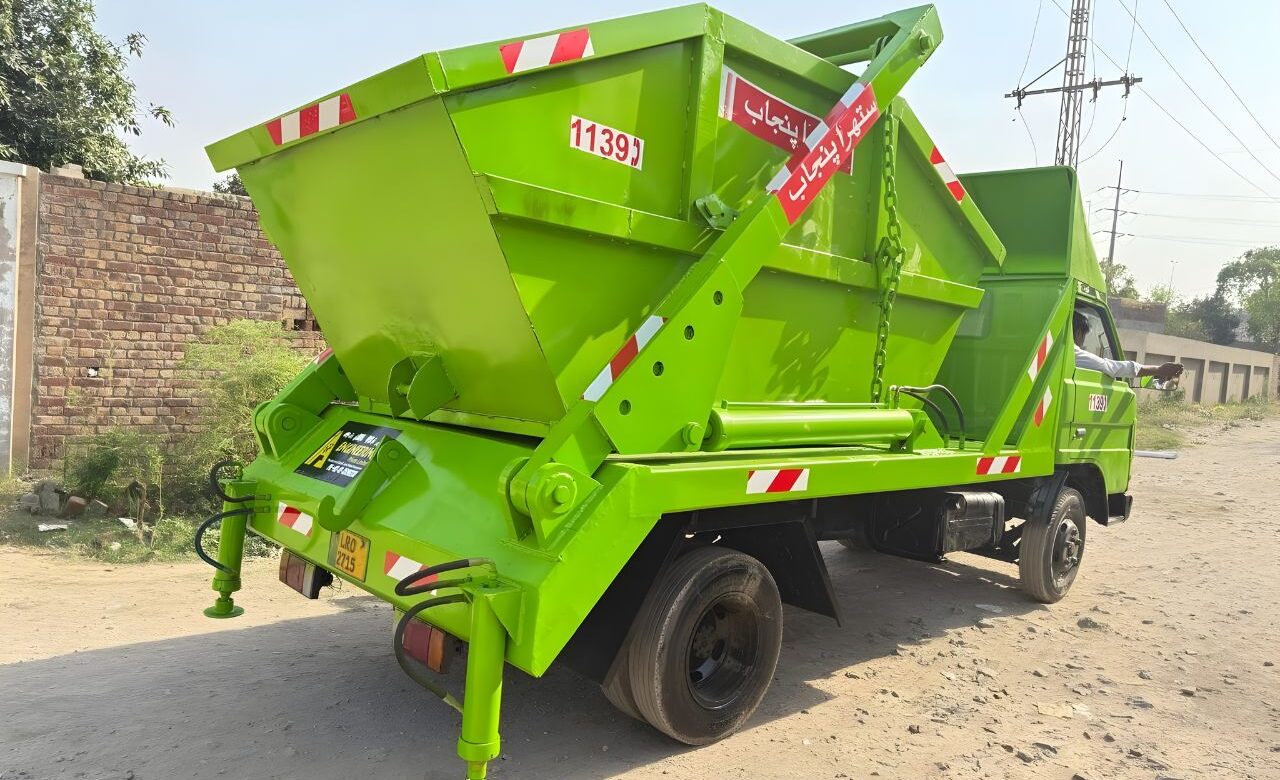
Skip Lifter: The Reliable Solution for Efficient Waste Handling
In modern waste management and construction industries, Skip Lifters have become essential equipment for lifting, transporting, and unloading heavy waste containers. Designed for strength, precision, and durability, these machines simplify the process of handling bulk waste, debris, and recyclables — saving time, labor, and operational costs.
This article explores how skip lifters work, their main components, and why they are one of the most efficient and reliable solutions in waste handling today.
What Is a Skip Lifter?
A Skip Lifter is a specialized vehicle or attachment system used to load, transport, and unload skip bins or detachable containers. These bins are commonly used for collecting and transporting construction waste, industrial scrap, and municipal garbage.
Skip lifters are built with a hydraulic lifting arm system that enables them to lift heavy containers securely and efficiently. Once loaded, the skip can be transported to the disposal or recycling site and easily unloaded with the same system.
Key Components of a Skip Lifter
To understand how a skip lifter operates, let’s look at its main components:
- Hydraulic Lifting Arms
The twin lifting arms are the primary components that handle the loading and unloading of skip bins. They operate using powerful hydraulic cylinders that provide precise lifting and lowering control. - Chains and Hooks
Heavy-duty chains are connected to the skip bin, ensuring it remains secure during lifting and transport. The hooks at the end of the arms lock onto the container’s lugs for safe handling. - Hydraulic System
The hydraulic system powers the lifting arms and provides smooth, efficient operation. It allows the operator to control the lifting speed and angle with precision. - Stabilizers (Outriggers)
These extend from the vehicle during loading and unloading to maintain balance and prevent tipping when handling heavy loads. - Control Panel
The operator uses a control panel — either manual or electronic — to manage all lifting, lowering, and locking functions. - Chassis or Mounting Frame
The skip lifter is mounted on a robust vehicle chassis or a standalone trailer frame to handle heavy-duty applications.
How Does a Skip Lifter Work?
The working process of a skip lifter is straightforward yet highly efficient. Here’s a step-by-step overview:
- Positioning the Vehicle
The operator positions the lifter in front of the skip container. - Attaching the Chains
The lifting chains are hooked onto the skip bin’s attachment points. - Lifting the Container
Using the hydraulic arms, the operator lifts the skip onto the vehicle bed or platform. - Securing the Load
Once in position, the skip is locked securely to ensure safe transport. - Transportation
The vehicle carries the skip to the designated site — whether it’s a landfill, recycling center, or construction yard. - Unloading the Skip
At the destination, the hydraulic arms are reversed to gently lower the container to the ground. The chains are then detached, and the vehicle is ready for the next job
The Science Behind Efficient Lifting
Skip lifters work on the principle of hydraulic pressure and mechanical leverage. The hydraulic system converts fluid pressure into linear motion, allowing the arms to lift massive loads with minimal effort. The dual-arm mechanism distributes weight evenly, ensuring stable lifting and preventing container tipping.
This scientific combination of hydraulic power and balanced design allows skip lifters to handle heavy containers safely and efficiently — even in challenging environments.
Benefits of Using Skip Lifters
- High Efficiency
Skip lifters enable quick loading and unloading, reducing turnaround times and increasing operational productivity. - Cost Savings
Fewer manual labor requirements and faster operations mean lower operational costs. - Versatility
They can handle a wide range of containers and are suitable for municipal, construction, and industrial waste applications. - Safety and Stability
The hydraulic lifting system and stabilizers ensure safe handling of heavy loads, reducing the risk of accidents. - Durability
Built from heavy-duty steel and equipped with industrial-grade hydraulics, skip lifters are designed for long-term, demanding use. - Environmental Advantage
By improving waste handling efficiency, skip lifters contribute to cleaner and more organized waste management operations.
Applications of Skip Lifters
Skip lifters are widely used across multiple industries:
- Municipal Waste Collection: Transporting skip bins from collection points to dumping or recycling sites.
- Construction and Demolition: Lifting debris-filled skips for easy site cleanup.
- Industrial Waste Management: Handling large waste containers safely and efficiently.
- Recycling Operations: Transferring materials between sorting and processing facilities.
Modern Innovations in Skip Lifting Technology
Modern skip lifters are now equipped with advanced features to enhance performance and safety:
- Remote control operation for precision and convenience.
- Smart hydraulic systems with automatic pressure adjustment.
- Load-sensing technology to prevent overloading.
- Compact and modular designs for easy installation and maintenance.
These innovations make skip lifters more efficient, user-friendly, and environmentally responsible.
Conclusion
A Skip Lifter is more than just a lifting system — it’s a key asset in today’s waste management and construction operations. With its robust hydraulic power, stable lifting mechanism, and versatility, it ensures that heavy containers are handled safely, efficiently, and reliably.
From city streets to industrial zones, skip lifters embody the perfect balance of engineering strength and operational efficiency, helping keep our world cleaner and more organized.
